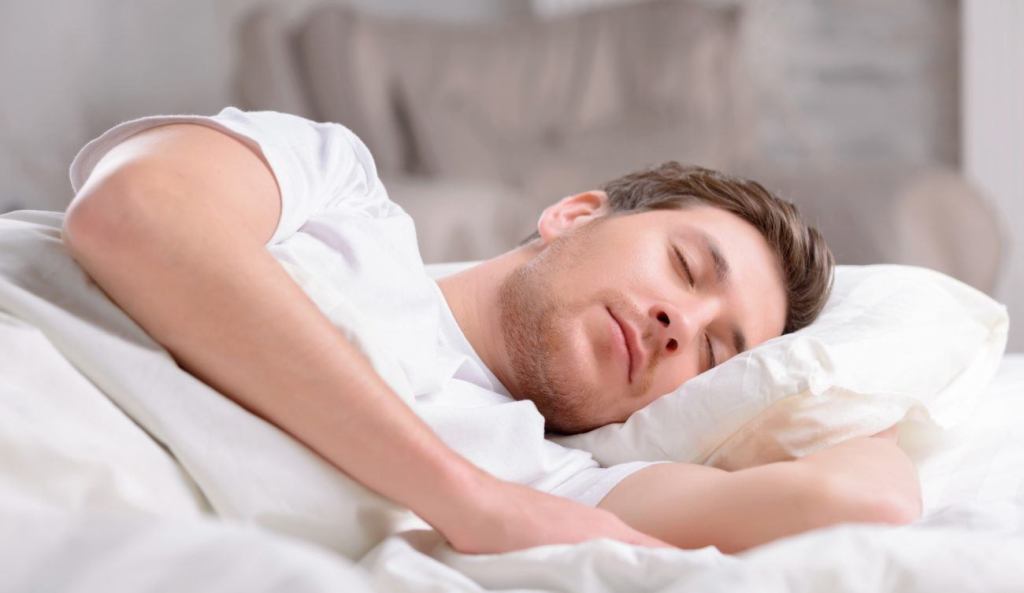
There is a known saying: «the guarantee of Health in a restful sleep.» Questions about the duration of sleep worry all lovers of physical education and a healthy lifestyle. A normal sleep is such a dream, after which you feel rested and cheerful. Each person feels immobile and notes a decrease in attention, mood and performance if several hours of sleep are not enough. What does it mean to reduce performance for an athlete? The athlete who does not sleep performs poor-quality training, shows low results.
Therefore, sleep is the main recovery event for the athlete! Prolonged sleep is important for athletes, regardless of their style. During sleep, the activity of the physiological functions of a person decreases, the forces of the body are aimed at restoring the energy expended during the waking period. Sleep can not be replaced by any other means-neither food, nor outdoor walks.
Gabby Badr, a sleep disorders specialist at the London Clinic, believes that lack of sleep negatively affects the state of our immune system and makes our body more vulnerable to diseases and Infectious Diseases. In addition, lack of sleep affects a person’s ability to think and concentrate.
Scientists engaged in the infographic of the company Ffunction and Zeo calculated that if a person does not get enough sleep, a person may have a slowing of the reaction, a decrease in metabolism, as well as a feeling that everything is given much more difficult than is actually the case. Irregular sleep can reduce metabolism by almost 30%. Sleep disorders increase the risk of exhaustion by 11%. Irregular sleep not only reduces the speed of reaction. It is proved that, engaged in the gym, the athlete who did not sleep after four days reduces the maximum lifted weight by five kilograms. And after thirty hours without sleep to perform the same actions, the athlete has to spend up to nineteen percent more energy.
A good sleep contributes to the Prevention of various diseases, prevents the development of chronic fatigue, absent-mindedness, negligence. it is proved that regular and full sleep helps, for example, tennis players to improve the accuracy of shots by 42%. A harmonious sleep regime helps swimmers improve their initial response by 17%.
So, American Scientists from the sleep Professional Association conducted a study of 5 Healthy Students of Stanford University of men’s and women’s swimming teams. During the first two weeks of the experiment, a normal sleep regime was maintained. The duration of sleep was then extended to 10 hours a day for 6-7 weeks. Sports results were evaluated after each training. After additional sleep, athletes swam 15 meters distance 0.15 seconds faster, improved the rotation time by 0.10 seconds.
From a medical point of view, most leading specialists tend to believe that on average a healthy person needs to sleep about 7-8 hours, but with significant physical exertion, especially during the preparatory period, the athlete’s need for quality sleep increases and should be at least 9 hours at night.
The founder of bodybuilding, Joe Vader, in the popular book Body Building System, also writes that muscle growth is based on the depletion of muscle energy. It takes time and rest for the energy reserves in your muscles to be replenished. Vader insists that an athlete who wants to achieve an optimal muscle growth rate must provide enough sleep and rest and allow the body to recover between workouts.
Joe Vader recommended athletes to use techniques to calm emotions before falling asleep and release consciousness from all negative and frustrating impressions received during the day. «Get rid of these harmful States, and then immediately focus on peace, harmony,success, victory. Establish a new productive state of thought by forcing negative phenomena to evaporate, and then project and affirm the ideals that you want to achieve. Mentally scroll through the video tape of success and building muscles in your mind and form a sense of confidence and Grace. A relaxed and positive state of consciousness will allow you to quickly fall asleep!», writes the founder of bodybuilding in his book.
In modern bodybuilding it is believed that if an athlete works on the result, on increasing the working weight, then sleep should last from 8 to 9 hours. It is this duration of night rest that will allow the athlete to gain strength, and the body to rest and recover after intensive training.
If the bodybuilder is trained simply to have a beautiful body, is engaged in athletics or an easy level of bodybuilding, then this sport can sleep less — about 6 hours.
When a person sleeps, the body unfolds the construction of new tissues and the removal of damaged and non-active old ones. During sleep, the level of anabolic processes increases significantly and the level of catabolism decreases (but it remains and gradually gaining strength). About 90% of the daily production of growth hormone occurs exactly during sleep. There is also an activation of t-lymphocytes, which are responsible for our immunity. In simple words, during sleep, we not only grow, but also recover. That is why, when a person is sick, he often tends to sleep, so that the body wants to start the recovery process.
But during sleep, the digestive system during sleep practically does not work, but since there is an active synthesis of proteins and amino acid metabolism, the body extracts the energy necessary in the process of destruction of muscle cells. That is why in the general recommendations on Nutrition in bodybuilding there is the mandatory intake of casein protein at night and the morning intake of a protein mixture (which allow you to restore these catabolic processes and start anabolism). In addition, in bodybuilding, the first meal after sleep is quite important, that is, breakfast. Morning meals give impetus to the Promotion of metabolism, so it is not recommended to skip breakfast to athletes.
The performance of the athlete will be influenced not only by the duration of sleep, but also by its quality. Even if a person sleeps 10 hours a day, but for some reason often wakes up, the quality and effectiveness of such sleep tends to 0.
Therefore, a person who leads a sports life must create an environment for a healthy sleep. For a restful sleep, you must first monitor the regime of going to bed, as well as ensure peace and quiet, the absence of stimuli that can cause excessive excitation of the nervous system, fresh air.
You can not train before bed. After all, after physical exertion, the nervous system is strained and can not quickly calm down, so there is a risk of not falling asleep for a long time.
In case of a sleep disorder, it is good, before going to bed, walk a little, make a foot bath or take a bath, drink soothing infusions. It is not recommended to exercise before going to bed, drink toning drinks at night (coffee, black or green tea, etc.), eat a lot. You can use sleeping pills only on the advice of a doctor.
Many athletes note that the day after training they really want to sleep. This is due to the fact that during intense movement, adenosine triphosphoric acid is produced in the body, which affects the brain, reducing its activity. Therefore, the body needs sleep.
Therefore, many professional athletes introduce a short day’s sleep into their diet. An experiment conducted at the Biological Research Institute (San Diego, USA) showed that even after a short day’s sleep, the working capacity, and therefore the productivity of the athlete, increases significantly. Athletes who are in preparation or recovery should sleep after lunch 1-2 hours, as they need more rest time to form a phase of slow sleep and muscle relaxation (the phase of slow sleep gives rest to the muscles, which is especially important for athletes).
 Finess Head